

Have you ever been caught off guard by a flat tire and wondered how long it would take to fix it? Knowing how quickly you can change a flat tire can save you time, stress, and even money.
Whether you’re stuck on the side of the road or just want to be prepared, understanding the process helps you feel more confident and in control. Keep reading to discover exactly how long it takes to change a flat tire—and get practical tips to make it faster and easier when it really counts.
Tools Needed
Changing a flat tire requires a few simple tools. Having the right tools makes the job faster and easier. These tools are common and easy to find. Keeping them in your car is a smart idea.
Jack
The jack lifts your car off the ground. It creates space to remove the flat tire. Most cars have a small, manual jack in the trunk. Use it carefully and place it under the car’s frame.
Lug Wrench
The lug wrench helps loosen and tighten the wheel nuts. It fits over the nuts and gives you the grip needed. This tool is essential for removing the flat tire and putting on the spare.
Spare Tire
The spare tire replaces the flat one. It is usually smaller and lighter. Check your spare regularly to ensure it is inflated and ready to use.
Wheel Wedges
Wheel wedges stop your car from rolling. Place them under the wheels opposite to the flat tire. They keep the car steady while you work.
Gloves
Gloves protect your hands from dirt and sharp objects. Use a pair to keep your hands clean and safe during the tire change.
Flashlight
A flashlight helps if you change a tire in the dark. Good light lets you see the tools and parts clearly. Keep a small flashlight in your car for emergencies.
Credit: www.mti.edu.pk
Preparing The Vehicle
Preparing the vehicle is the first step in changing a flat tire. It sets the stage for a safe and smooth process. Taking time to prepare helps avoid accidents and makes the tire change quicker.
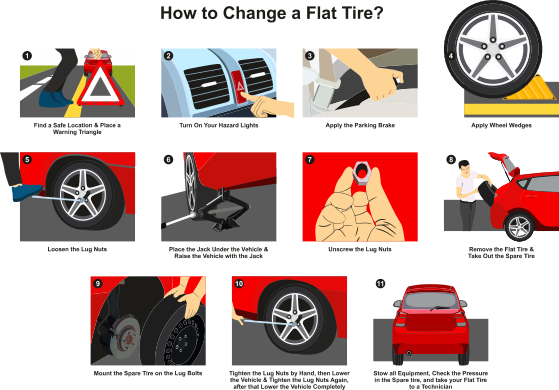
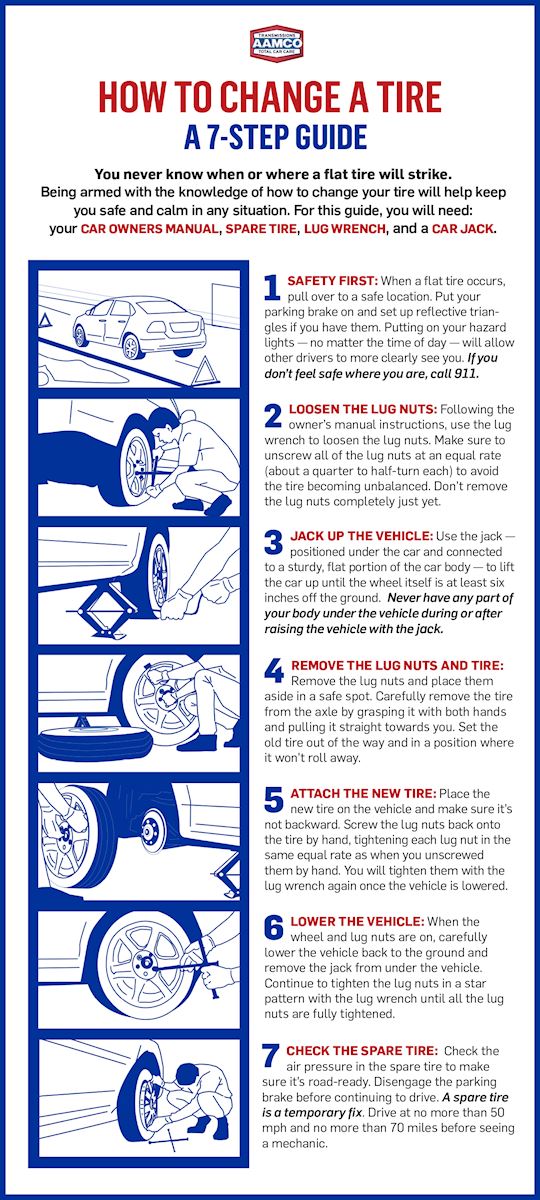
Start by stopping the car in a safe place. Look for a flat, firm surface away from traffic. This keeps you and your vehicle safe during the tire change.
Turn On Hazard Lights
Switch on your hazard lights immediately. This warns other drivers that your car is stopped. It helps prevent accidents and alerts nearby vehicles.
Apply The Parking Brake
Engage the parking brake firmly. This stops the car from rolling while you work. Safety is key to avoid injuries or damage.
Place Wheel Wedges
Put wheel wedges in front or behind the tires. This blocks the car from moving. Use them opposite to the flat tire side for best effect.
Gather Tools And Spare Tire
Collect all necessary tools before starting. Get your jack, lug wrench, and spare tire ready. Having everything close saves time and effort.
Removing The Flat Tire
Removing the flat tire is a key step in fixing a flat. It takes some care and simple tools. This part sets the stage for putting on the spare tire quickly and safely.
First, loosen the lug nuts before lifting the car. This makes removal easier later. Use the correct wrench to avoid slipping.
Loosening The Lug Nuts
Place the wrench on each lug nut. Turn counterclockwise to loosen. Do not remove them completely yet.
Loosen each nut a little at a time. This keeps the tire from spinning.
Lifting The Vehicle
Use a jack to raise the car off the ground. Find a solid spot under the car frame.
Lift slowly until the tire is clear of the ground. Keep the jack steady.
Removing The Lug Nuts
Now, remove the lug nuts fully. Keep them in a safe place.
Pull the flat tire straight off the wheel hub. It may take a small wiggle.
Installing The Spare Tire
Installing the spare tire is the key step after removing the flat tire. It ensures your vehicle can move safely to a repair shop or home. This process takes care and attention to do it right.
Following the right steps helps avoid problems on the road. The spare tire must fit properly and be secure. Safety depends on a well-installed spare tire.
Positioning The Spare Tire On The Hub
Place the spare tire on the wheel hub carefully. Align the holes in the tire with the wheel studs. Make sure it fits snugly without forcing it.
Check that the tire sits evenly against the hub. This prevents wobbling and helps secure the tire tightly.
Hand-tightening The Lug Nuts
Start threading the lug nuts onto the wheel studs by hand. Turn them clockwise to avoid cross-threading. Hand-tightening ensures the nuts hold the tire in place.
Do not fully tighten the nuts yet. Just enough to keep the tire stable while lowering the car.
Lowering The Vehicle And Final Tightening
Carefully lower the car until the spare tire touches the ground. This adds resistance to tighten the nuts securely. Use a wrench to tighten the lug nuts in a crisscross pattern.
Ensure each nut is tight to keep the tire firm. This step prevents loosening while driving.
Final Checks And Tips
After changing a flat tire, some final checks can keep you safe on the road. These steps ensure the tire is secure and ready to drive. Taking time for these tips helps avoid problems later.
Check The Lug Nuts
Make sure all lug nuts are tight. Use the wrench to secure them firmly. Loose nuts can cause the tire to wobble or fall off.
Inspect The Tire Pressure
Check the air pressure with a gauge. Inflate the tire to the recommended level. Proper pressure helps your tire last longer and keeps driving smooth.
Look For Tire Damage
Examine the tire for cuts or sharp objects. Remove any debris stuck in the tread. Damage can cause another flat or unsafe driving conditions.
Test Drive Slowly
Drive a short distance at low speed. Listen for unusual sounds or vibrations. Stop and recheck if anything feels wrong.
Store Tools And Flat Tire Safely
Put your tools back in the car. Place the flat tire in a secure spot. Keeping things organized helps in case of another emergency.
Credit: www.reddit.com
Credit: www.aamcoblog.com
Frequently Asked Questions
How Long Does It Take To Change A Flat Tire?
Changing a flat tire usually takes 15 to 30 minutes for most people. It depends on experience and tools available.
What Tools Are Needed To Change A Flat Tire Quickly?
You need a jack, lug wrench, spare tire, and wheel wedges to change a flat tire safely and fast.
Can I Change A Flat Tire Without Any Help?
Yes, you can change a flat tire alone by following safety steps and using proper tools carefully.
Conclusion
Changing a flat tire usually takes around 15 to 30 minutes. This time depends on your experience and tools available. Practice helps you work faster and with more confidence. Always keep your spare tire and jack ready in your car.
Safety is important, so find a safe spot before starting. Knowing this skill can save you from long waits on the road. Stay calm and take your time. You can handle a flat tire with patience and care.

My name is Max langon and I am the founder of automothrone.com website. From this website, you will get automotive related information